
Privacy matters when medication is personal. Whether you are managing allergies, erectile dysfunction, weight concerns, HIV prevention, or a long-standing prescription, you may not want a conversation at the counter or a package that advertises its contents. Knowing how to buy medication privately online means protecting both your health information and your money - without cutting corners on product quality or legal requirements.
The best private purchase is not the one with the fewest questions. It is the one that uses a legitimate pharmacy, protects your data, provides clear product details, and gets your order to you discreetly.
Start With a Legitimate Pharmacy
A professional-looking website is not proof that a medication seller is legitimate. Private online shopping should still include basic checks: a real business identity, a way to contact customer support, transparent policies, and clear information about where medications are dispensed or shipped from.
For prescription-only drugs in the United States, a legitimate pharmacy will generally require a valid prescription or offer access to an appropriate licensed prescriber. That can feel less anonymous than a no-questions-asked checkout, but it is a meaningful safety check. A seller that promises prescription medication with no prescription, no medical review, and no accountability creates a real risk of counterfeit, expired, mislabeled, or improperly stored products.
Look closely at the product page. It should identify the active ingredient, strength, dosage form, quantity, manufacturer where applicable, and basic directions or safety information. Vague listings that rely only on brand-name-style marketing are not enough when you are putting a drug in your body.
How to Buy Medication Privately Online Without Giving Up Safety
Privacy is not the same as secrecy. You can keep an order discreet while still providing the information a legitimate pharmacy needs to fill it safely. That distinction protects you from sellers that use privacy claims to avoid responsibility.
Use a personal email address that you control and secure it with a unique password and two-factor authentication. Your email may hold order confirmations, prescription notices, refill reminders, and delivery updates. If someone else can access it, discreet packaging will not solve the privacy problem.
At checkout, provide accurate shipping details. Delivery failures are more likely when a buyer uses incomplete names, incorrect apartment numbers, or addresses where packages cannot be received securely. If you share a home, consider a delivery location you are authorized to use and can access reliably, such as a secure package locker or a private mailbox service.
Before paying, read the privacy policy and checkout terms. A responsible seller should explain what personal information it collects, why it collects it, and how it handles marketing communications. You should be able to opt out of promotional emails or texts without losing access to essential order updates.
Choose Secure Payment Over False Anonymity
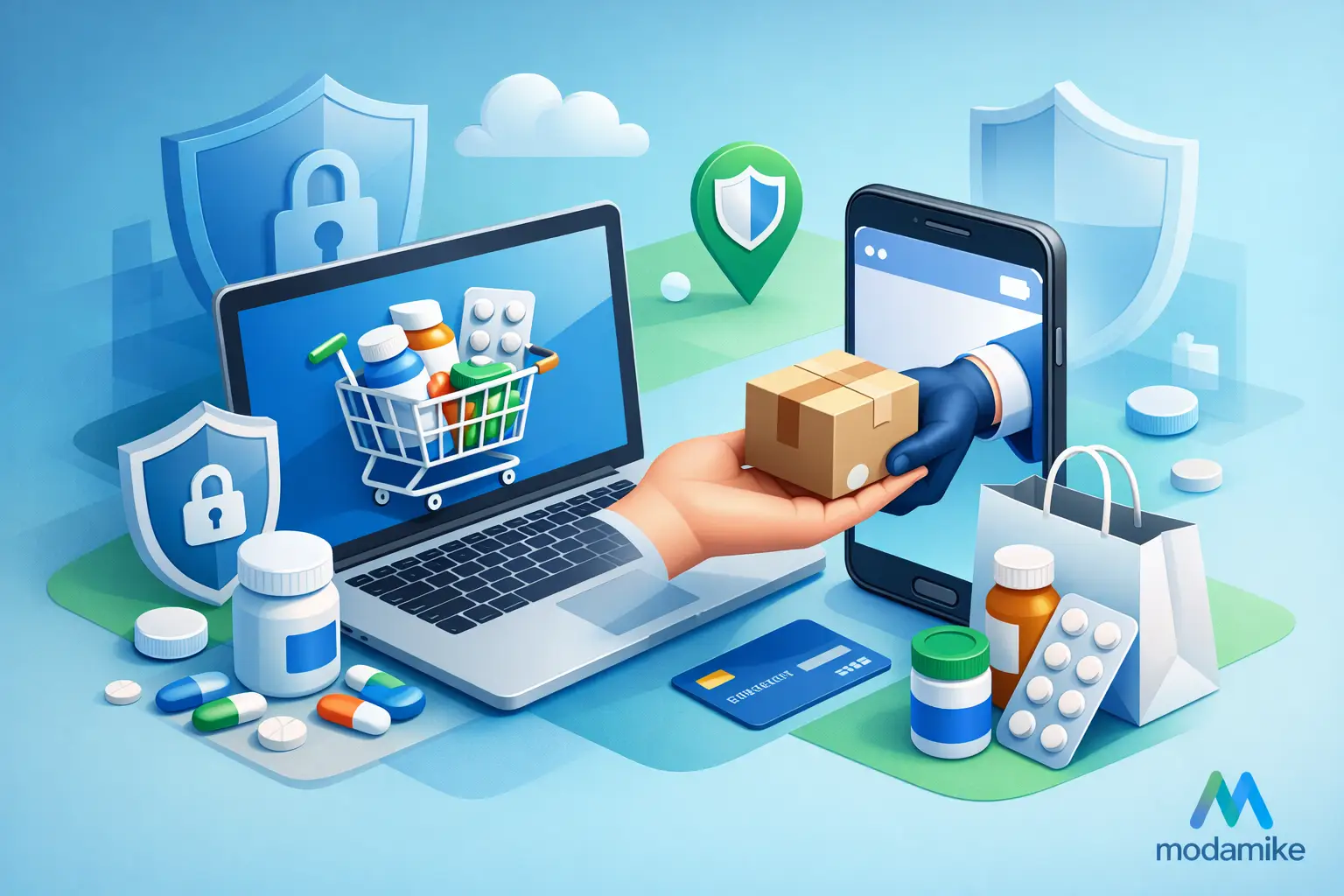
Payment privacy deserves a practical approach. A secure credit or debit card transaction usually provides useful fraud protections and a clear record if an order is missing or unauthorized. Some buyers prefer digital wallets or other payment options to limit what they share with a retailer, but every method has trade-offs.
Do not assume a payment method makes an unsafe seller trustworthy. Cryptocurrency, wire transfers, gift cards, and peer-to-peer payments can be difficult or impossible to reverse if the seller fails to deliver. They may offer less protection than a card payment when there is a dispute. If a pharmacy pushes irreversible payment only, treats basic questions as a problem, or offers unusually deep discounts for fast payment, step back.
Use a private internet connection when possible. Avoid entering health details or card numbers on public Wi-Fi in airports, hotels, coffee shops, or shared workspaces. Keep your device updated, use a screen lock, and do not save payment details in a browser on a shared computer.
Ask for Discreet Delivery, Not Misleading Delivery
Discreet shipping is a reasonable request. In practice, that usually means plain outer packaging without the medication name, condition, or promotional wording displayed on the outside. The shipping label still needs enough accurate information for a carrier to deliver the package and for the sender to meet applicable shipping rules.
Check the retailer's delivery policy before ordering. Confirm estimated processing and transit times, whether signature confirmation is required, how tracking is provided, and what happens if a package is delayed, damaged, or lost. A clear reship or refund policy can reduce risk, but read the conditions. Some policies apply only after a defined waiting period, only to tracked shipments, or only if the buyer provided a correct address.
Temperature-sensitive medications require extra care. Products such as injectable medications may need controlled shipping conditions and should not be left in a hot mailbox, on a porch in freezing weather, or in direct sun. Privacy is useful, but proper handling comes first. Plan to receive the package promptly.
Protect Your Medical Information After the Order
Private purchasing does not end when the package arrives. Review order emails, account settings, and delivery notifications. Turn off lock-screen previews if you do not want medication-related alerts visible to anyone who picks up your phone. Delete saved documents only if you do not need them for returns, reimbursement, or medical records - keeping a private, secure record of what you took and when can be valuable.
Store medication in its original labeled container unless a pharmacist or clinician advises otherwise. The label provides the drug name, strength, expiration date, and directions. Removing it for privacy can create avoidable risks, especially in a shared household or during an emergency.
If you live with others and want additional discretion, use a locked medication box. This is particularly sensible for drugs that may be harmful to children, pets, or people for whom they were not prescribed. Never share medication, even when another person seems to have the same symptoms or asks for a few tablets.
Know the Warning Signs Before You Check Out
Private online medication shopping should feel straightforward, not pressured. Pause the purchase if a website has no verifiable customer support, no clear return or delivery policy, no product lot or expiration information, or no explanation of how prescriptions are handled when required.
Be cautious when claims sound too perfect: guaranteed results, zero side effects, miracle weight loss, or substitutes for medical care. The same applies to prices that are far below every reputable competitor with no explanation. Generics can be more affordable than brand-name products, but they should still identify the active ingredient and meet quality standards.
For medications that affect alertness, blood pressure, blood sugar, sexual function, mood, immunity, or weight, interactions can matter as much as the medication itself. A quick conversation with a clinician or pharmacist can identify conflicts with other prescriptions, supplements, alcohol, or existing health conditions. That conversation can remain private too.
A Private Process Should Still Leave You in Control
The goal is simple: buy only what you understand, from a source that earns your trust, using a payment and delivery method you can manage safely. Discreet packaging, secure checkout, and respectful customer service are reasonable expectations. Skipping verification, ignoring safety information, or accepting an unclear product is not the price of privacy.
A good private order gives you more control, not less. You should know what you are receiving, who to contact if something goes wrong, and how to use the medication safely once it arrives.