

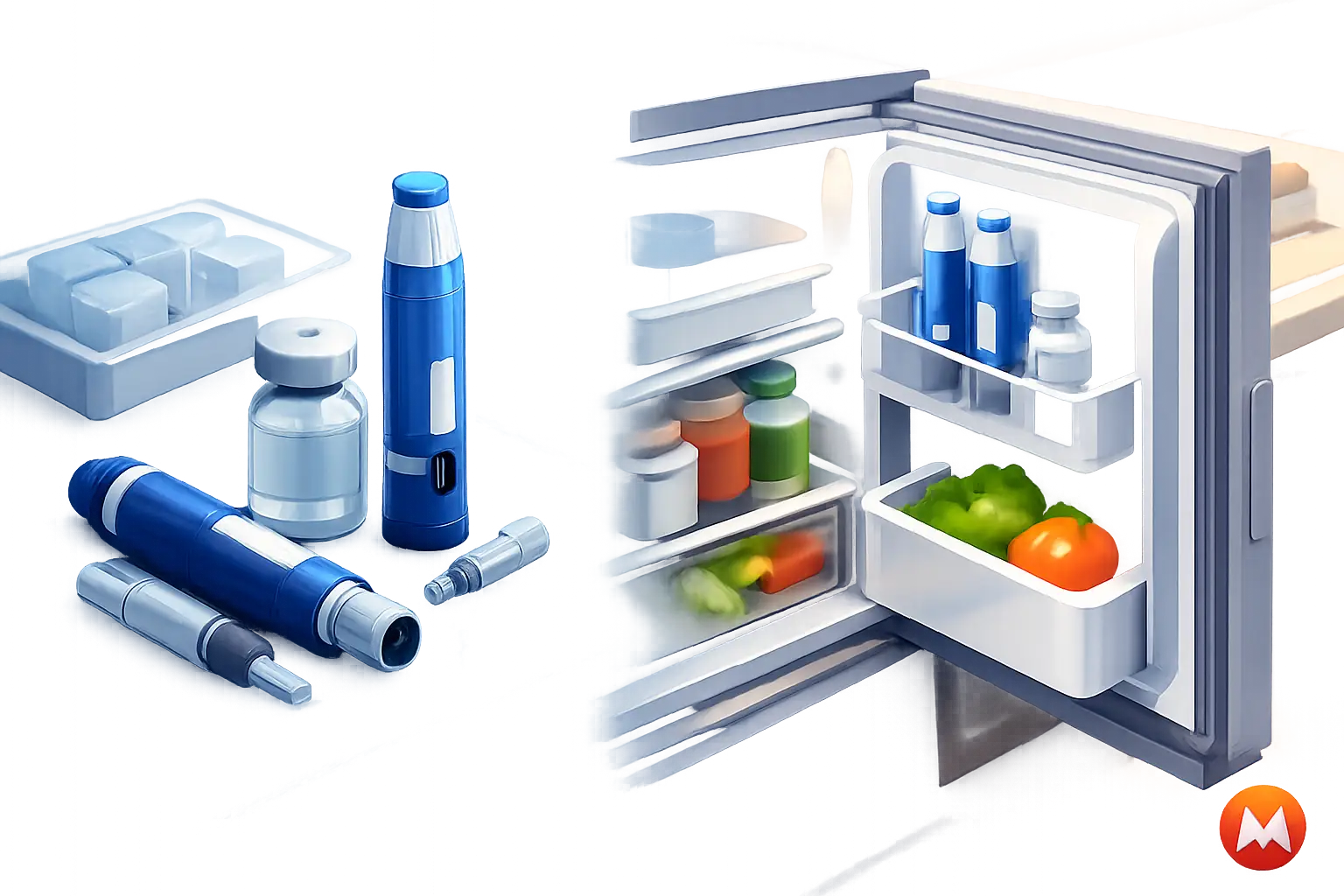
A semaglutide pen left in a hot car, a package sitting in a sunny mailbox, or medication pushed against the back of a freezing refrigerator can create a real storage problem. If you are asking, does semaglutide require refrigeration, the short answer is yes before first use for most branded semaglutide pens. After first use, the answer depends on the exact product and its labeled instructions.
Semaglutide is not a product to guess about. Storage rules protect the medication from temperature damage that may make it less reliable. Check the carton, pen label, and pharmacy instructions first, especially if you have a generic, compounded, or non-US product. Different manufacturers can use different formulations and different beyond-first-use timelines.
Does Semaglutide Require Refrigeration Before Use?
Usually, yes. Unopened semaglutide pens are generally stored in a refrigerator at 36°F to 46°F (2°C to 8°C). Keep the pen in its original carton until you are ready to use it. The carton adds a layer of protection from light, while the refrigerator keeps the medication within its intended temperature range.
Do not freeze semaglutide. Do not store it directly beside the refrigerator’s cooling element, in the freezer compartment, or where it can touch ice packs. A refrigerator can have colder zones than its thermostat suggests, particularly at the back wall. The center shelf is usually a more stable choice than the door or rear of the unit.
A brief period outside the refrigerator does not automatically mean a pen is ruined. But the acceptable room-temperature window is product-specific. That is why the package insert and manufacturer instructions matter more than general advice found online.
Why temperature matters
Semaglutide is a peptide-based medication. Excess heat, direct sunlight, and freezing conditions can affect its stability. You may not always see obvious damage when a medication has been exposed to the wrong conditions. A pen can look normal while its storage history is no longer certain.
That is the practical rule: do not rely on appearance alone after a major temperature event. If a pen was frozen, left in extreme heat, or stored outside its labeled limits for an unknown amount of time, contact the dispensing pharmacy or manufacturer before using it.
Storage After Your First Semaglutide Dose
For many common semaglutide pens, refrigeration remains an option after first use, but room-temperature storage may also be allowed for a limited period. The exact time limit can differ substantially by product.
For example, some semaglutide injection pens may be kept at room temperature below 86°F (30°C) for several weeks after first use, while others have a different limit. The dose type matters too. A pen used for diabetes management may have instructions that differ from a pen used for chronic weight management, even when both contain semaglutide.
Keep the pen cap on when it is not in use. Store it away from direct light and heat. Do not leave it on a bathroom counter near steam, on a kitchen windowsill, or in a vehicle. Room temperature means a normal, controlled indoor space - not a warm backpack, glove compartment, or outdoor delivery box.
If you refrigerate an in-use pen, keep it in the carton or otherwise protect it from light. Avoid placing it where it may freeze. If you choose room-temperature storage because it is more convenient, write the first-use date on the carton so you know when the allowed use period ends.
Refrigeration Rules for Generic and Compounded Semaglutide
Not every semaglutide product comes in the same pen, concentration, vial, or packaging. This is where generic and compounded products require extra attention.
A compounded semaglutide vial may have a different storage requirement than a prefilled pen. Some preparations need continuous refrigeration. Others may carry a specific beyond-use date once punctured. If bacteriostatic water, a multidose vial, or a nonstandard concentration is involved, do not apply branded-pen instructions automatically.
Follow the instructions supplied with your exact product. If the label says refrigerate, refrigerate it. If it gives a room-temperature allowance, follow that limit exactly. If the label is unclear, do not improvise based on another semaglutide pen you have used in the past.
This is also worth checking as soon as your order arrives. Confirm the packaging is intact, review the stated storage range, and place the medication where it belongs right away. It takes less than a minute and can prevent a costly mistake.
What to Do If Semaglutide Arrives Warm
Shipping conditions can make buyers nervous, especially in summer or during weather delays. A shipment that feels cool, or even mildly warm on the outside, is not enough information by itself to determine whether medication is usable. What matters is the product’s validated shipping method, the labeled excursion allowance, and how long it was exposed to temperatures outside the recommended range.
Start by checking the shipment promptly. If the product arrived with cold packs, remember that cold packs can thaw during transit. That alone does not prove the medication was stored improperly. Check for leaks, cracks, a damaged pen, broken seals, or evidence that the medication froze.
Do not use a product that appears frozen, has leaked, has been exposed to obvious high heat for an extended period, or has unclear storage instructions. Keep the packaging, take photos if there is visible damage, and contact the seller or dispensing provider with the order details. Fast action makes it easier to resolve a shipping concern.
Once you confirm the product is in acceptable condition, refrigerate it right away if its label requires refrigerated storage. Do not try to “fix” a warm pen by placing it in the freezer. Freezing is not a reset button.
A Simple Semaglutide Storage Routine
A reliable routine removes the guesswork. Keep unopened pens refrigerated in their cartons. Keep them away from the freezer wall and refrigerator door. After opening, follow the exact product’s allowed storage window, whether refrigerated or at controlled room temperature.
For travel, use an insulated medication case with cool packs separated from the pen by a barrier. The goal is cool, not frozen. Do not put the pen directly against a gel pack. If you are flying, carry semaglutide with you rather than checking it in luggage, where temperatures can be harder to control.
At home, consider using a small refrigerator thermometer if your fridge runs unusually cold or fluctuates often. This is especially useful if you have noticed frozen produce or drinks near the rear of the refrigerator. A stable temperature is better than assuming the appliance is operating correctly.
When You Should Not Use the Pen
Do not use semaglutide if the solution is cloudy, colored, contains particles, or looks different from the product description. Most semaglutide solutions should be clear and colorless, though you should always verify this against your specific label.
Also pause before using the medication if it has been frozen, exposed to extreme heat, damaged during transit, or stored past its labeled in-use date. Replacing questionable medication is frustrating, but using a product with an uncertain storage history is not worth the risk.
A clear label, a stable refrigerator, and a written first-use date are usually all you need. Keep your semaglutide out of heat, out of the freezer, and within the instructions for the exact pen or vial in your hand. When storage is uncertain, a pharmacist can give you a direct answer before your next dose.