
If pills work but feel like a temporary patch, you’ve probably asked a smarter follow-up question: what is erectile dysfunction shockwave therapy, and is it actually worth the hassle? That question usually comes up when someone wants better erections without planning every sexual encounter around medication timing. Fair enough. Convenience matters, but so does knowing whether a treatment is fixing a cause or just covering a symptom.
Erectile dysfunction shockwave therapy is a noninvasive treatment that uses low-intensity acoustic waves directed at penile tissue. The goal is to stimulate blood vessel repair and growth, improve blood flow, and help natural erectile function work better over time. Unlike oral ED drugs, which mostly improve blood flow for a limited window, shockwave therapy is pitched as a regenerative approach. That’s the selling point. The catch is that results are not instant, not guaranteed, and not equally strong for every type of ED.
What is erectile dysfunction shockwave therapy doing in the body?
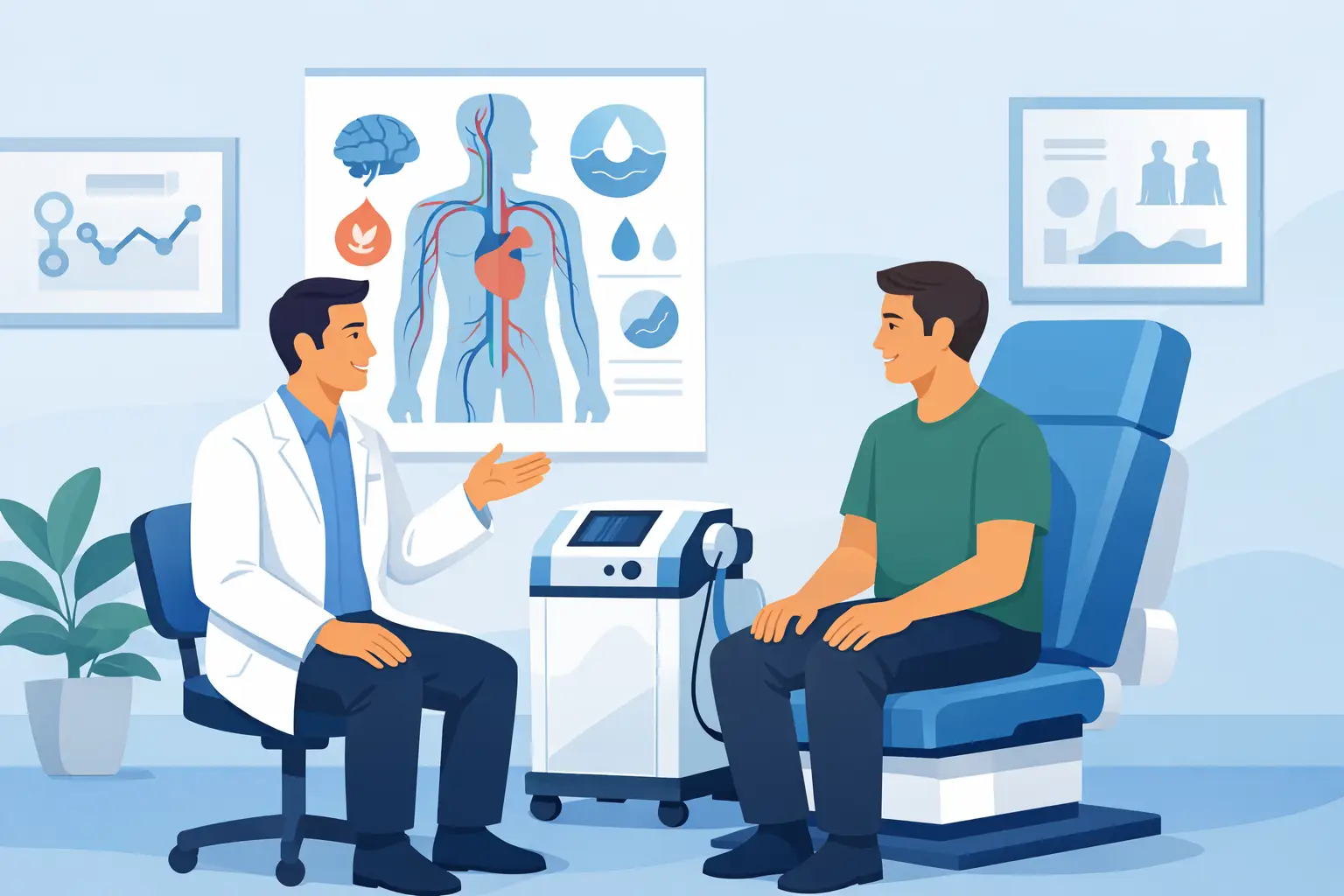
Despite the name, this is not the kind of shockwave used to break up kidney stones. In ED treatment, the energy level is much lower. A provider uses a handheld device to deliver pulses to specific areas of the penis, and sometimes the surrounding tissue, in a series of short sessions.
The theory is straightforward. Those pulses create controlled mechanical stress in the tissue, which may trigger a healing response. That response may increase blood vessel formation, improve endothelial function, and support better circulation. Since many cases of ED have a vascular component, especially in men with age-related changes, metabolic issues, smoking history, or mild cardiovascular risk, better blood flow is the main target.
That makes shockwave therapy different from treatments that simply force the erection process for a few hours. It is trying to improve the plumbing, not just open the tap for one night.
Who may benefit from erectile dysfunction shockwave therapy?
The best candidates are usually men with mild to moderate vasculogenic ED. In plain English, that means erection problems mainly tied to reduced blood flow rather than severe nerve damage, major hormonal issues, or advanced structural problems.
Men who still get some spontaneous erections, respond at least partly to sildenafil or tadalafil, or have gradually worsening performance rather than complete dysfunction tend to be the population most often discussed in studies. That doesn’t mean everyone in that group gets a strong result. It means the odds are better there than in more complex cases.
If ED is caused by uncontrolled diabetes, pelvic surgery, spinal cord injury, low testosterone, severe psychological distress, or medication side effects, shockwave therapy may help less or not much at all. That’s one reason the hype can get ahead of reality. ED is not one condition with one cause. It’s a symptom with different drivers, and treatment only works well when it matches the driver.
What a treatment course usually looks like
A typical protocol involves multiple office visits over several weeks. The exact number varies by clinic and machine, but many programs use 6 to 12 sessions. Each visit is fairly short, often around 15 to 30 minutes.
No surgery is involved. No needles are usually needed. Most men describe the treatment as uncomfortable at most, not truly painful, though that depends on device settings and individual sensitivity. Afterward, patients generally go back to normal activity right away. That low-friction setup is a big part of the appeal.
The less appealing part is that this is rarely a one-and-done fix. It takes time, repeated visits, and patience. If you want an immediate result for this weekend, shockwave therapy is not built for that job.
How effective is shockwave therapy for ED?
This is where the answer gets less clean.
Some clinical studies have shown improved erectile function scores, better response to PDE5 inhibitors, and stronger spontaneous erections in selected men, particularly those with vasculogenic ED. That’s the optimistic case, and it’s the reason the treatment keeps getting attention.
But the evidence is still mixed in terms of standardization. Different studies use different machines, energy settings, treatment schedules, and patient populations. That makes it harder to compare results head-to-head or promise a predictable outcome. Some men report meaningful improvement. Others get only a modest boost. Some feel no real change after spending a decent amount of time and money.
So yes, it may work. No, it is not a guaranteed upgrade.
The practical way to think about it is this: oral ED meds like sildenafil and tadalafil often offer more predictable short-term performance, while shockwave therapy is an attempt at longer-term functional improvement. One is immediate support. The other is a bet on gradual repair.
What is erectile dysfunction shockwave therapy compared with pills?
For most men, the comparison comes down to speed, cost, convenience, and expectations.
Pills are simple. You take them, you know roughly when they’ll work, and the effect is temporary. For buyers who want discretion, speed, and no clinic visits, that model is hard to beat. It is direct, familiar, and easy to repeat.
Shockwave therapy is less convenient upfront because it usually requires a treatment series at a clinic. It also tends to cost more than generic ED medication. On the other hand, if it works well, it may reduce dependence on pills or make those pills work better at lower doses.
That trade-off matters. If someone is getting solid results from standard ED meds and is happy with that routine, shockwave therapy may feel like unnecessary extra effort. If someone is tired of planning around tablets, dealing with inconsistent response, or chasing a more natural baseline, the treatment starts to make more sense.
Risks, downsides, and the part clinics sometimes gloss over
Shockwave therapy is generally considered low risk, especially compared with surgery or injections. Side effects are usually mild if they happen at all, such as temporary soreness, redness, or sensitivity.
The bigger downside is not danger. It’s uncertainty.
There is still no universal treatment protocol across providers. Some clinics market the service aggressively, but not every machine has equal evidence behind it, and not every operator has the same level of experience. That means two patients can both buy “shockwave therapy” and receive meaningfully different treatments.
Cost is another issue. Insurance coverage is often limited or nonexistent, so many patients pay out of pocket. For a therapy with variable outcomes, that makes some buyers pause. Reasonably so.
And if a provider sells it as a cure for every kind of ED, that’s a red flag. Serious ED treatment always involves some version of “it depends.” Anyone skipping that part is selling too hard.
Who should think twice before pursuing it?
Men with severe ED after prostate surgery, advanced diabetic nerve damage, major untreated hormonal problems, or clear psychological causes may need a different approach first. The same goes for anyone expecting overnight results.
It also makes sense to pause if you have symptoms pointing to a broader health issue, like chest pain with exertion, poorly controlled blood pressure, or a sudden major change in erectile function. ED can be an early warning sign for cardiovascular problems. Treating the bedroom symptom without looking at the bigger picture can miss the real issue.
Questions worth asking before paying for treatment
If you’re seriously considering it, get practical fast. Ask what kind of device is being used, how many sessions are included, what type of ED they think you have, and what their realistic success rate is for someone in your situation. Ask whether patients often still need PDE5 inhibitors afterward.
That last question matters more than clinics like to admit. Improvement does not always mean pill-free sex forever. Sometimes the win is better firmness, more consistency, or stronger response to medication. Those are still wins, but they are different from a full cure.
Where shockwave therapy fits in a real-world ED strategy
For self-directed buyers, the smartest view is usually not all-or-nothing. Shockwave therapy can be one tool, not the whole toolbox. Some men use it alongside lifestyle changes, testosterone evaluation when appropriate, and standard ED medications. Others skip it and stick with what is proven, cheap, and easy to access.
That decision often comes down to your tolerance for friction. If you want immediate, predictable support, medication remains the more practical lane. If you are aiming for longer-term function and don’t mind multiple sessions with a less certain payoff, shockwave therapy may be worth considering.
Moda Mike’s audience already understands this kind of trade-off. Fast access and no unnecessary gatekeeping matter, but so does choosing the right tool for the outcome you want. Shockwave therapy is interesting because it aims at the cause in some men, not just the moment.
The useful way to look at it is simple: if your goal is better erections tonight, this is probably not your first move. If your goal is to improve baseline performance over time and you understand the results may vary, it can be a reasonable option to explore with clear eyes and realistic expectations.
The best treatment is the one that matches your type of ED, your budget, and how much hassle you’re willing to tolerate for a possible long-term payoff.